“Franconia 3.0” – an Operating System for the Ages
Have you ever thought of companies having “operating systems” just like our computers? It seems like everything today can be thought of as a group of systems, relationships, policies and procedures, even in the way brains and bodies function. Why not nonprofits, too?
After investing in a year-long 2025-2030 Strategic Planning process in 2024, Franconia was equipped with a clear set of goals and strategies, paired with the vision and impact within our mission. (Scroll all the way down for our “Logic Model” framework.) For me, digesting it became akin to updating Franconia’s operating system by 2030, alongside our 30th birthday, hence “Franconia 3.0.”
We have three decades understanding how important it is to provide residency-based experiences to contemporary artists that (literally) shape how humanity understands our world. That’s why at the core of the growing tree that is Franconia, we find artists and audiences.
Franconia 3.0 means serving these people well. We’re doing things like increasing awards for artists and educators. New systems like Site and Artistic Councils that give rounded support for participating artists. New Teaching Artists in Residence this year with Chicago Avenue Fire Arts Center are helping artists successfully reach their next big steps. Instead of charging residents for tools and living on site, we provide free access to more equipment than ever before, and food for any meal shared by people living here.


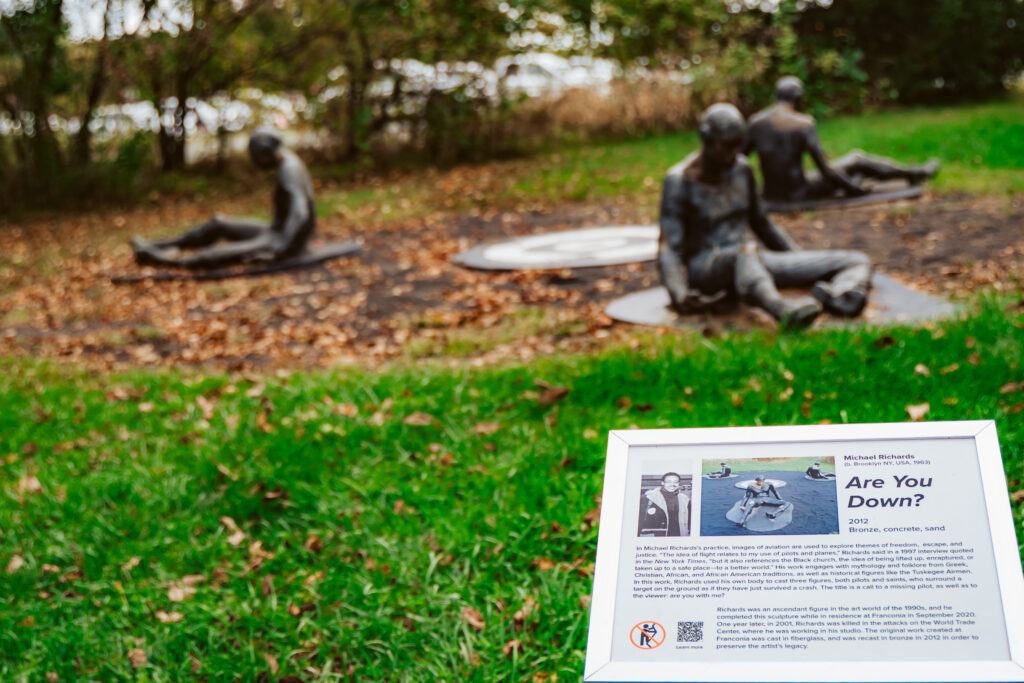
Audiences notice a difference too! New ChromaLuxe* signage for each sculpture, sharply maintained grounds, amenities in the Visitor Center, an expanded gift shop, electric golf carts, and evening hours help Franconia show its best to everyone. We’ve never offered more programming to the community, and we are able to do so while never denying scholarship support, and remaining free and open daily.
What has to operate – to function – in order for this vision to thrive?
A wise mentor told me, “No money – no mission!”
We still pay bills (and taxes) in money. Dollars are like gas in the engine, and if our annual budget was a full tank, we are running around $2,500 per day. Fortunately, Franconia has some pillars to lean on, thanks in great part to your love of the park.
From Parking Donations to Monthly and Annual Gifts: Our goal is to encourage at least one in 50 visitors to give to Franconia at the $5+/month level, which would add more than $200,000 to support Franconia’s mission. By putting signs out, communicating with the community, and highlighting our needs, Franconia has more than doubled individual donations since opening the Visitor Center. Thanks to a Capacity Building Grant from the St. Croix Valley Foundation, we recently rolled out a comprehensive software that manages all these points for fundraising and communications, a freshly-cleaned trove of 30 years of information. With more than 6,000 gifts made each year, we finally have the tools to manage it!
We know people spend money, can they spend a little more here? Headline is, our 180,000 annual visitors create more than $5.2M in regional economic activity through their spending. Thanks to a remarkable nationwide, decades-long studies by Americans for the Arts, and thousands of surveys conducted by ArtReach St. Croix, nonprofits like Franconia have a clear snapshot of where our visitors come from, and how they plan to spend money during their trip. So, if I know how the average person will spend $31.15 ($11.09 on food, $9.87 on retail shopping) we can grow into working these large numbers for Franconia. This is why we’ve expanded the gift shop this year, and are still continuing to pursue adding food and THC to Franconia: because going from $2/visitor in 2023 to over $3/visitor in 2025 drives more than $100,000 in new revenues.


Bundled together, we are building on the foundation of what Franconia does well through data-informed strategy. This Franconia 3.0 operating system keeps the park on track as we celebrate 30 years, and look ahead to many, many more!
I want to share a way of thinking that can help encompass this and any nonprofit endeavor. In graduate school, we learned about the “Logic Model” framework: that INPUTS like time, talent, and treasure create OUTPUTS like sculptures, residencies, and events. Those OUTPUTS have measurable OUTCOMES, countable or qualitative aspects like how many attendees, instances of new skills learned, or the first chance to make public art outside. Over time, those OUTCOMES create an IMPACT: for artists, for audiences, for the region’s economy, for the world’s creative enrichment. We could spend days looking forwards and backwards through this model framework; in fact, we spent a year analyzing what we want, what we do, and how it should change.
* Thanks to Unique Imaging, ChromaLuxe, Apogee, and the Neumann Family for contributing all-new signage, like the sign pictured below, throughout the park.
—
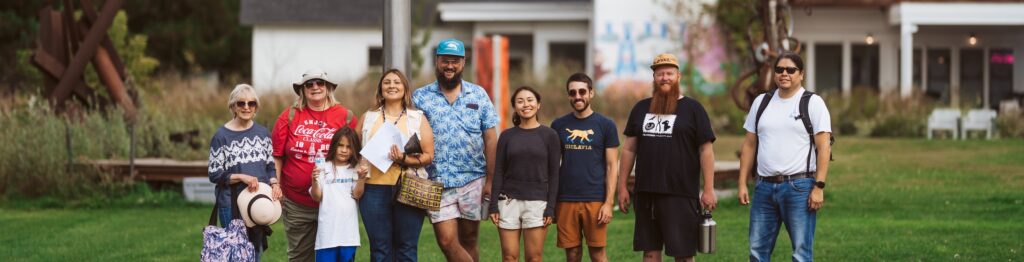
About the images:This post features photos by Brent Snyder from some of Franconia’s incredible 30th year events and programming