
U.A.V. 7845 (Unidentified Ancestral Vessel)
2025
Marvin Touré
Mud, wood, concrete, steel
12ft x 17ft x 15ft
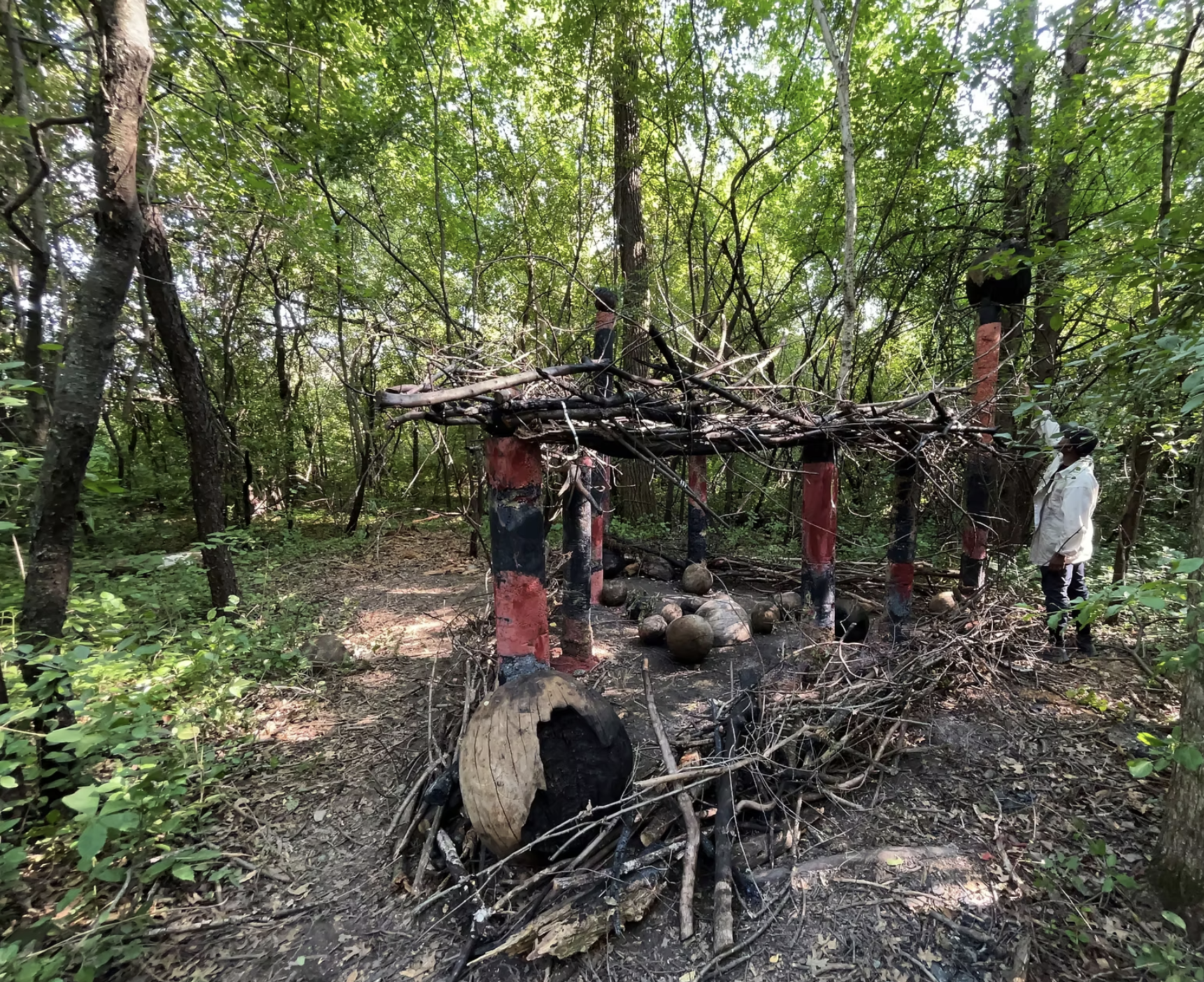
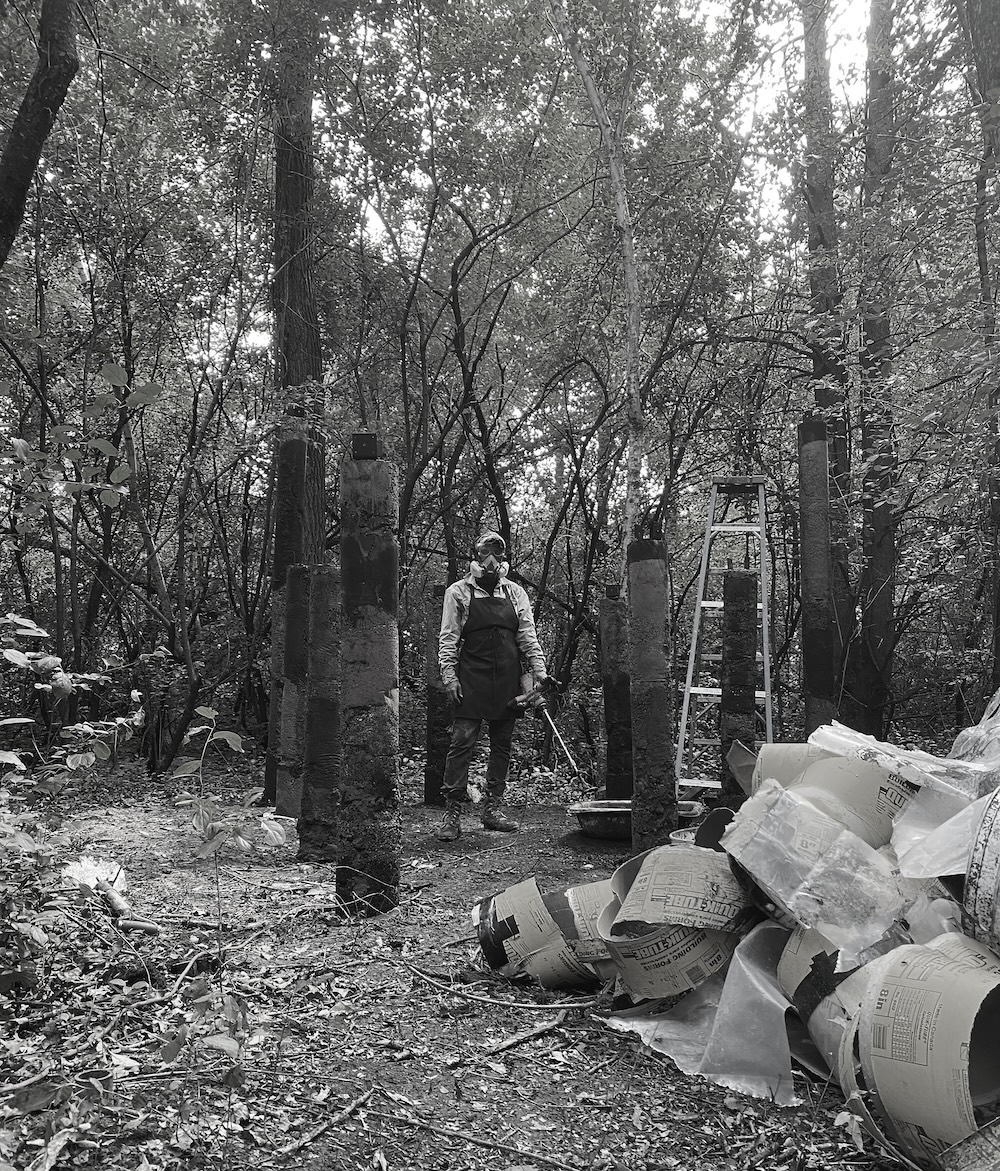
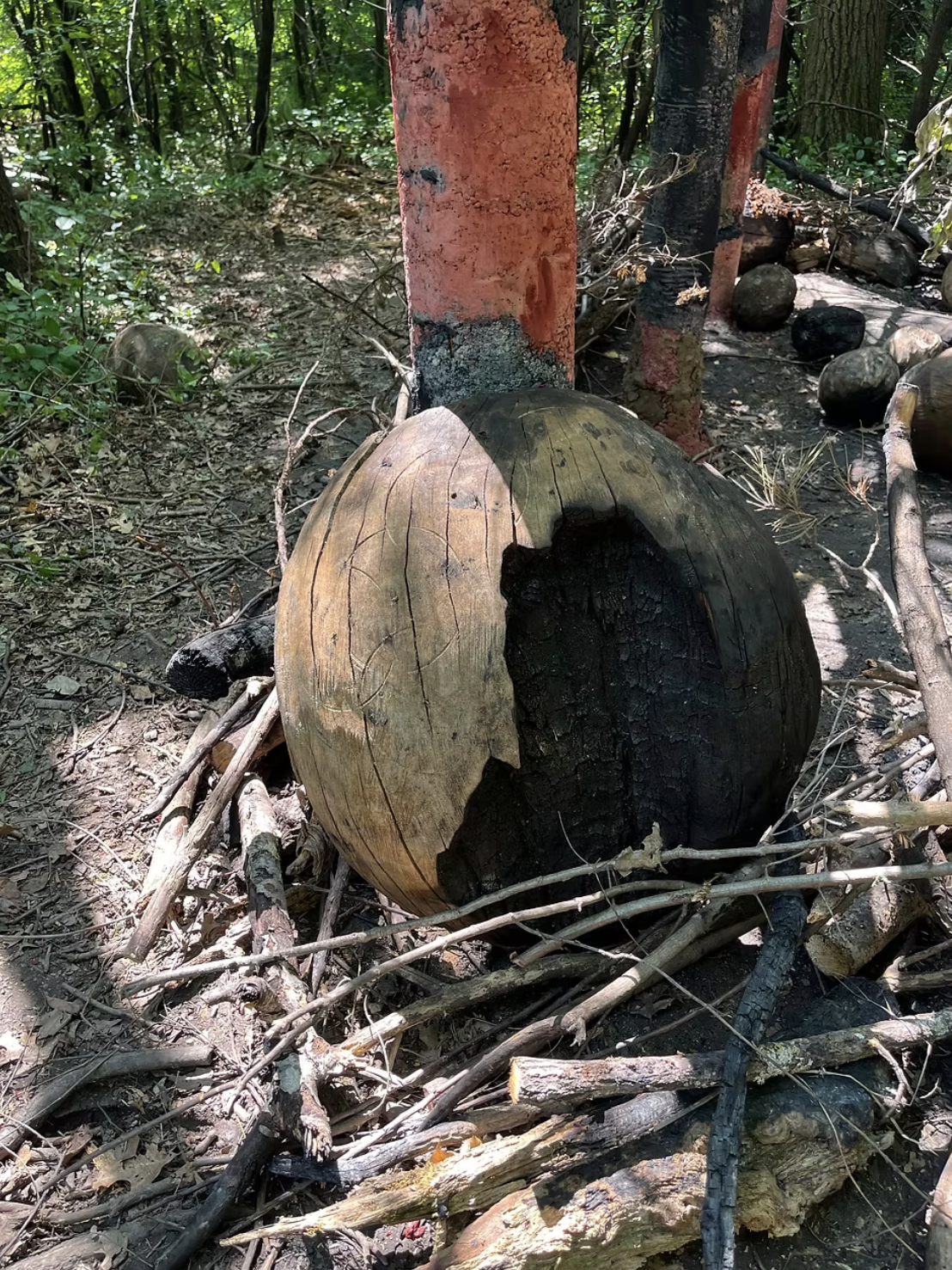
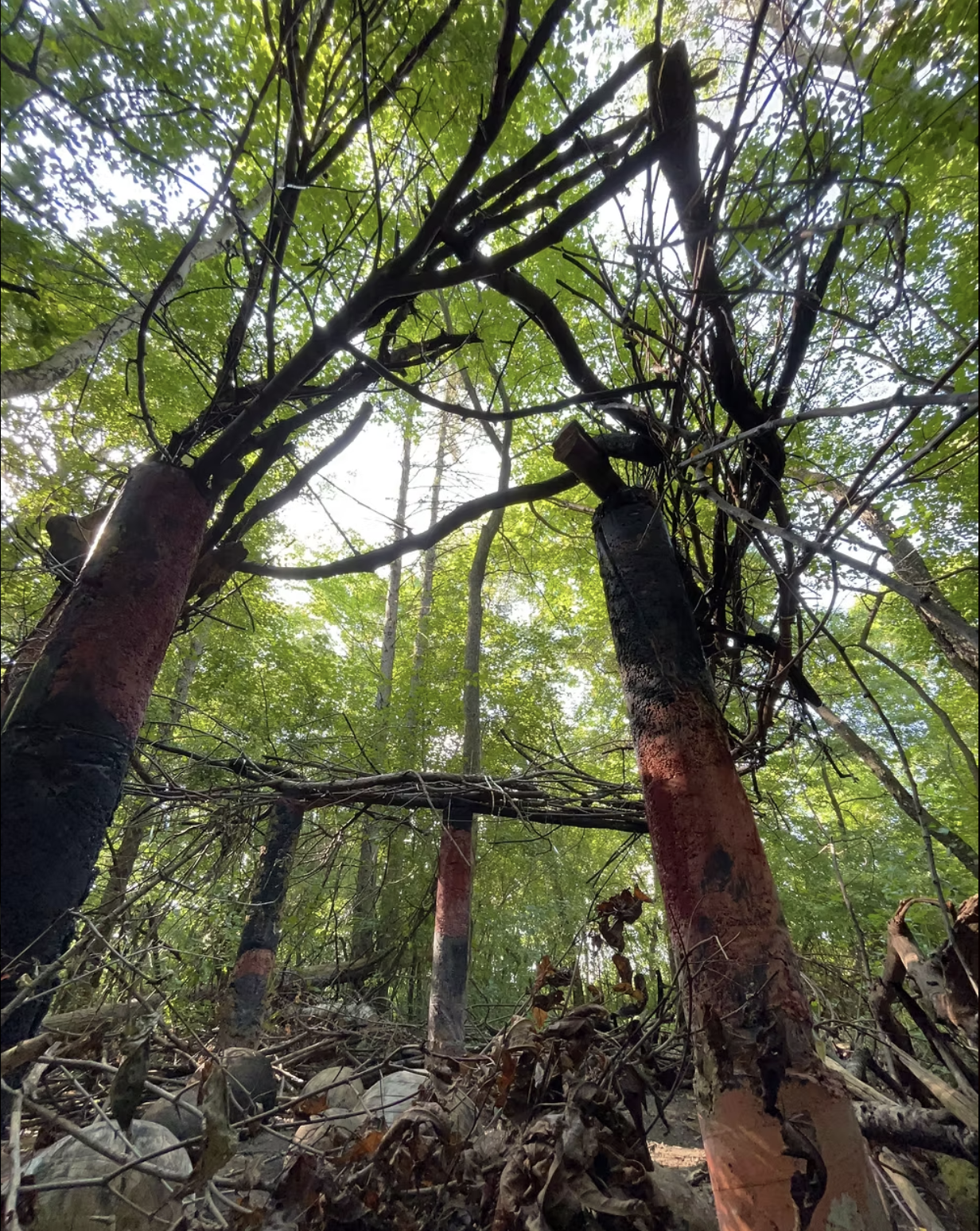
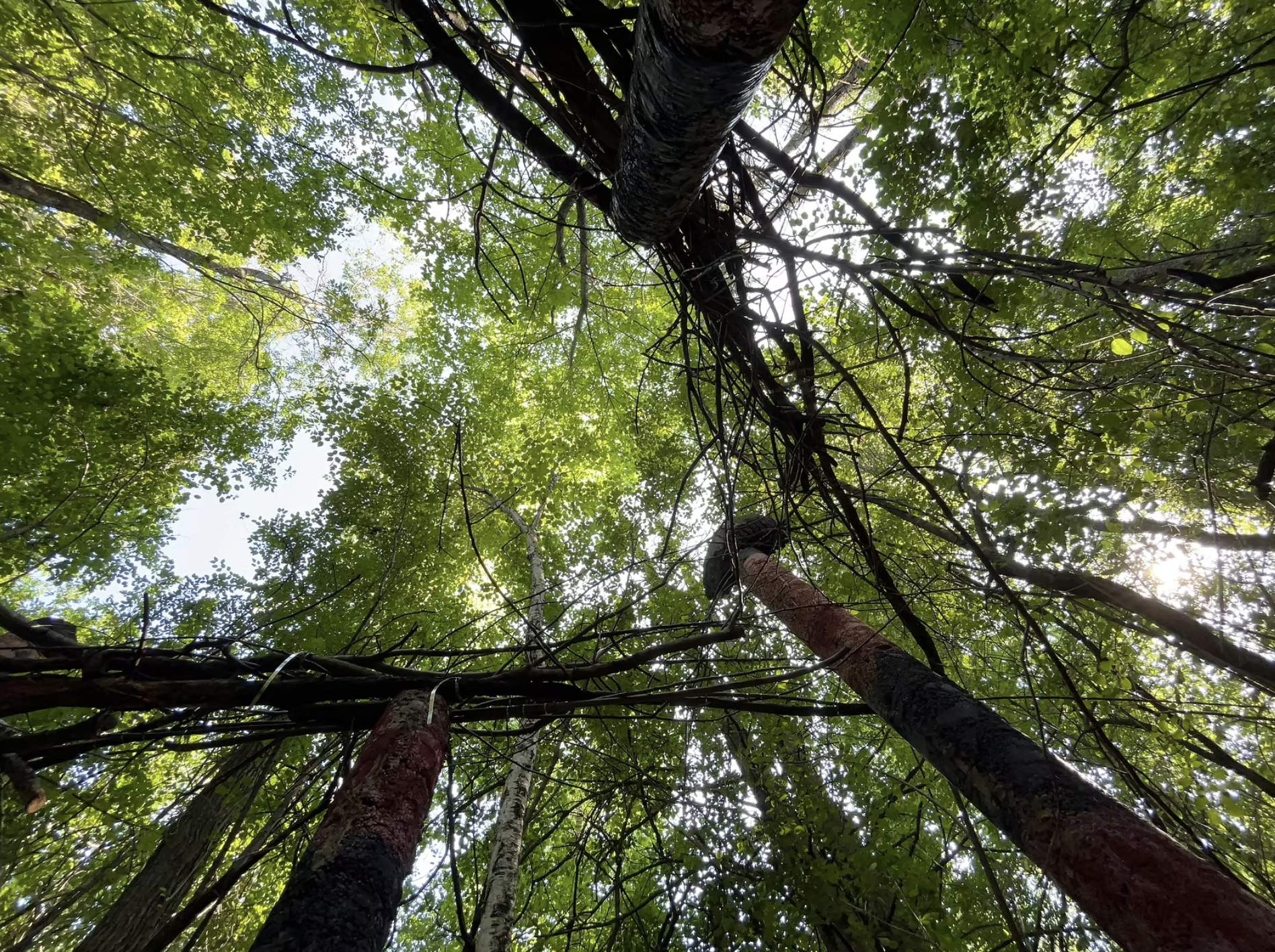
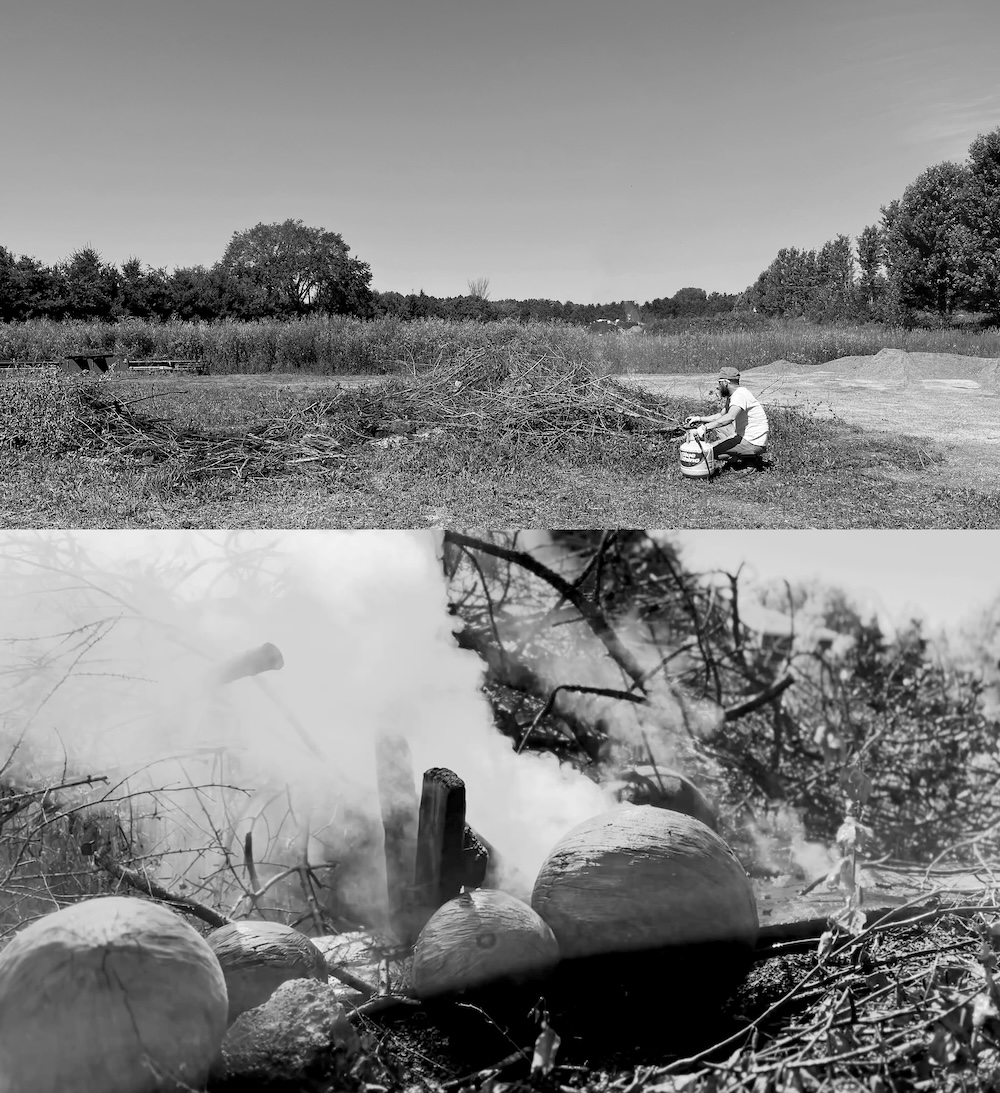
Our story begins in the northeastern region of Côte d’Ivoire. A couple of lefts, many rights, and straight down a dirt road is where you’ll find [REDACTED] or “the eternal village” in English. One day, a child ran into the schoolhouse and proclaimed that a “witch’s spaceship” had been found in the woods. Rumors swirled about the potential origin. Was it from that new village, [REDACTED], up the road? What about the two men the witch hunter caught last month? Curiosity reached a fever pitch, and everyone rushed to the forest to see for themselves. When they arrived, to a mix of relief and disappointment, all they found were sticks tied and arranged in the shape of a large triangle. Although written off as an innocuous form among the trees, questions remained as to its origins. How did it fly? How could it? Is this a piece of something bigger?
This unidentified ancestral vessel was conjured from a memory that was shared with me as a child. My spatial practice centers on the staging of ritual spaces as an act of storytelling and mythology. Rooted in the study of familial histories and material exploration, I engage the aesthetics of worship and ruin. As we continue to face erasure, the vessels that house our histories and myths must persist. This piece contains poured pigmented concrete pillars, found tree branches, and salvaged wooden orbs (originally from James R. Long’s 2009 piece “Vessel with Orbs”).
Kwaku’s /ɡrās/
2025
Marvin Touré
Marble, wood, concrete, steel, thread, resin, oil, acrylic
6ft x 22ft x 11ft
Kwaku [REDACTED]
noun
[REDACTED]
[REDACTED] /ɡrās/
noun
1. simple elegance or refinement of movement.
2. a state of sanctification enjoyed through divine assistance
3. courteous goodwill.
verb
1. to confer dignity or honor on
2. do honor to (someone or something) by one’s presence
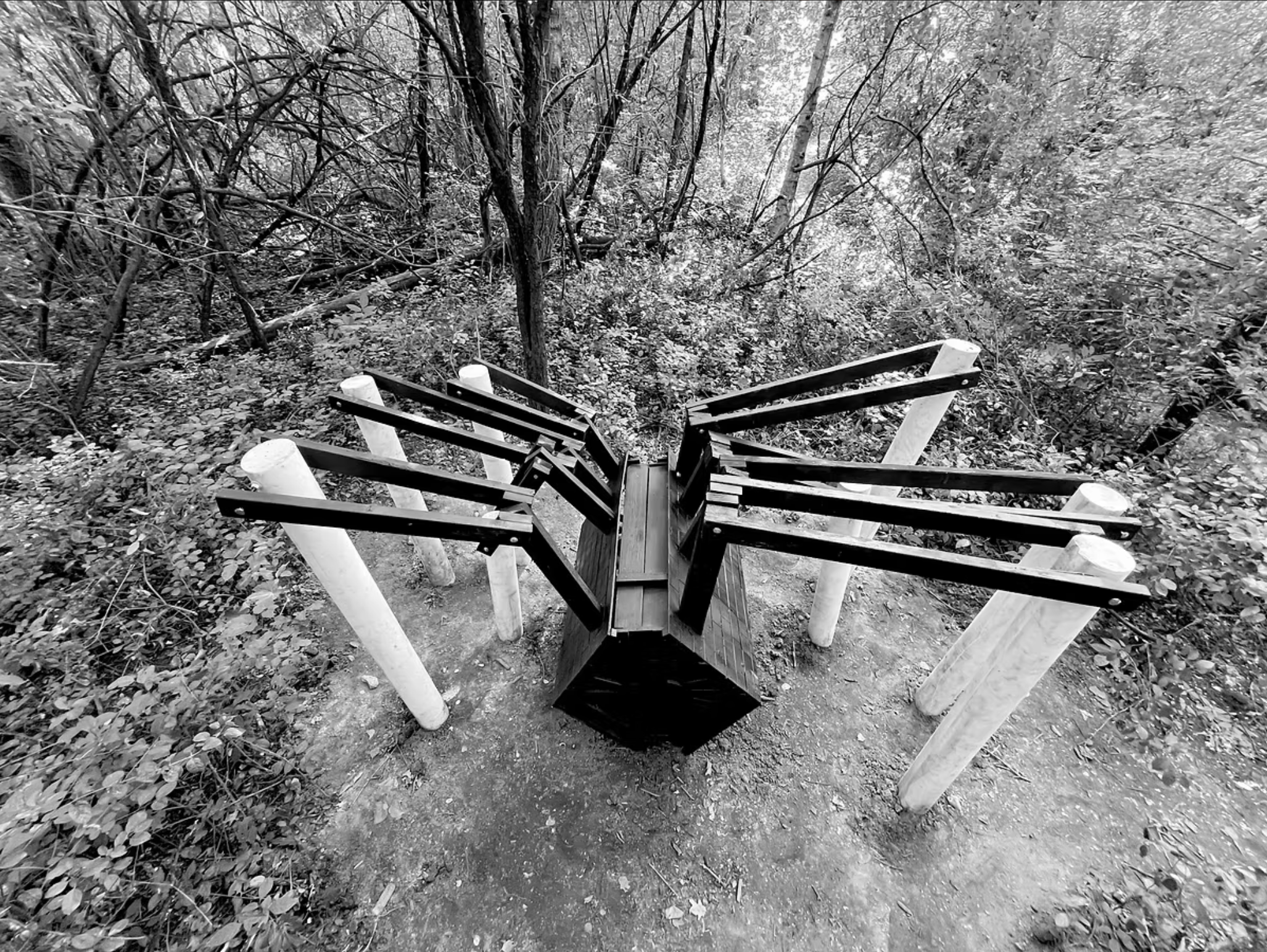
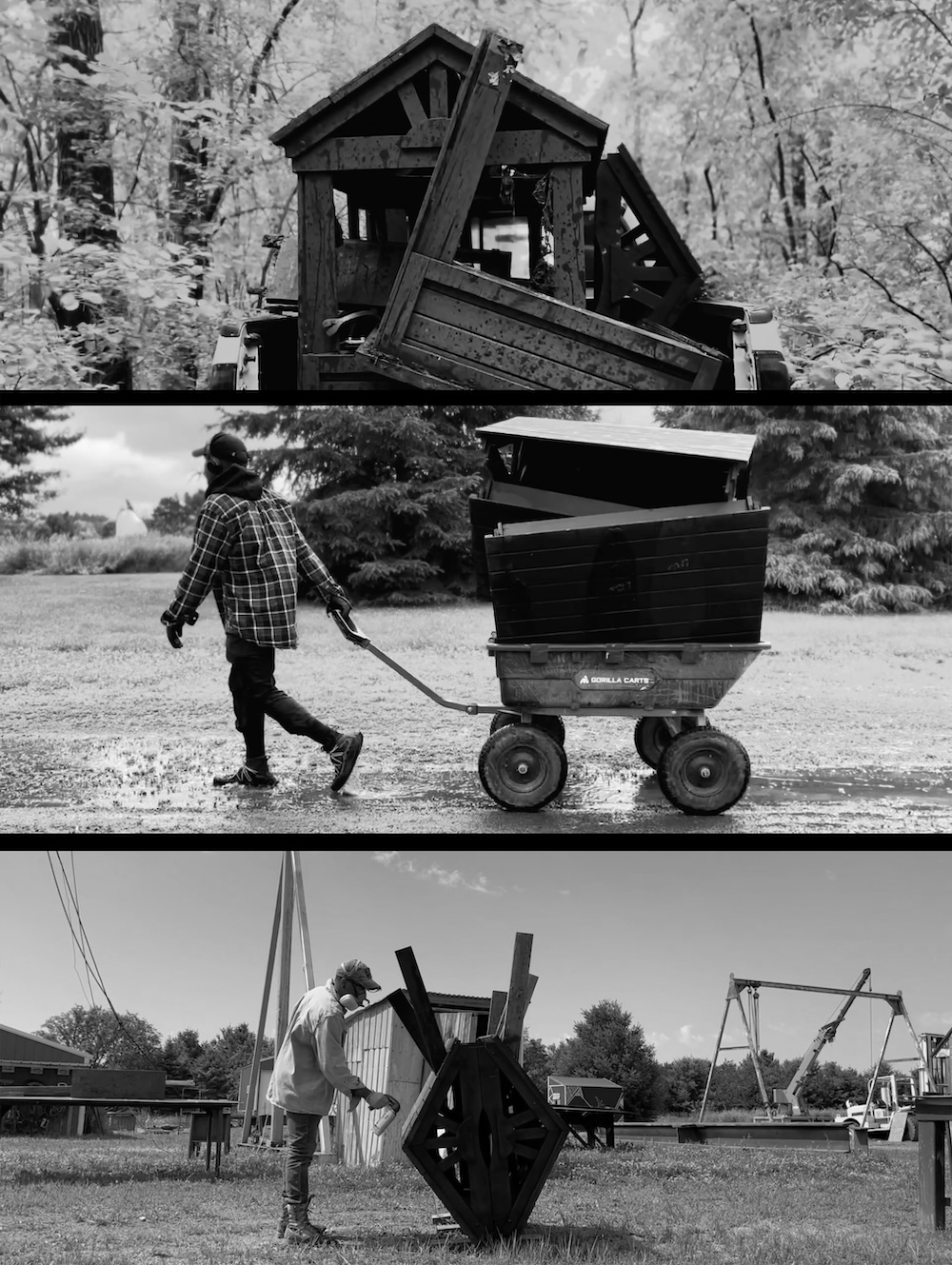
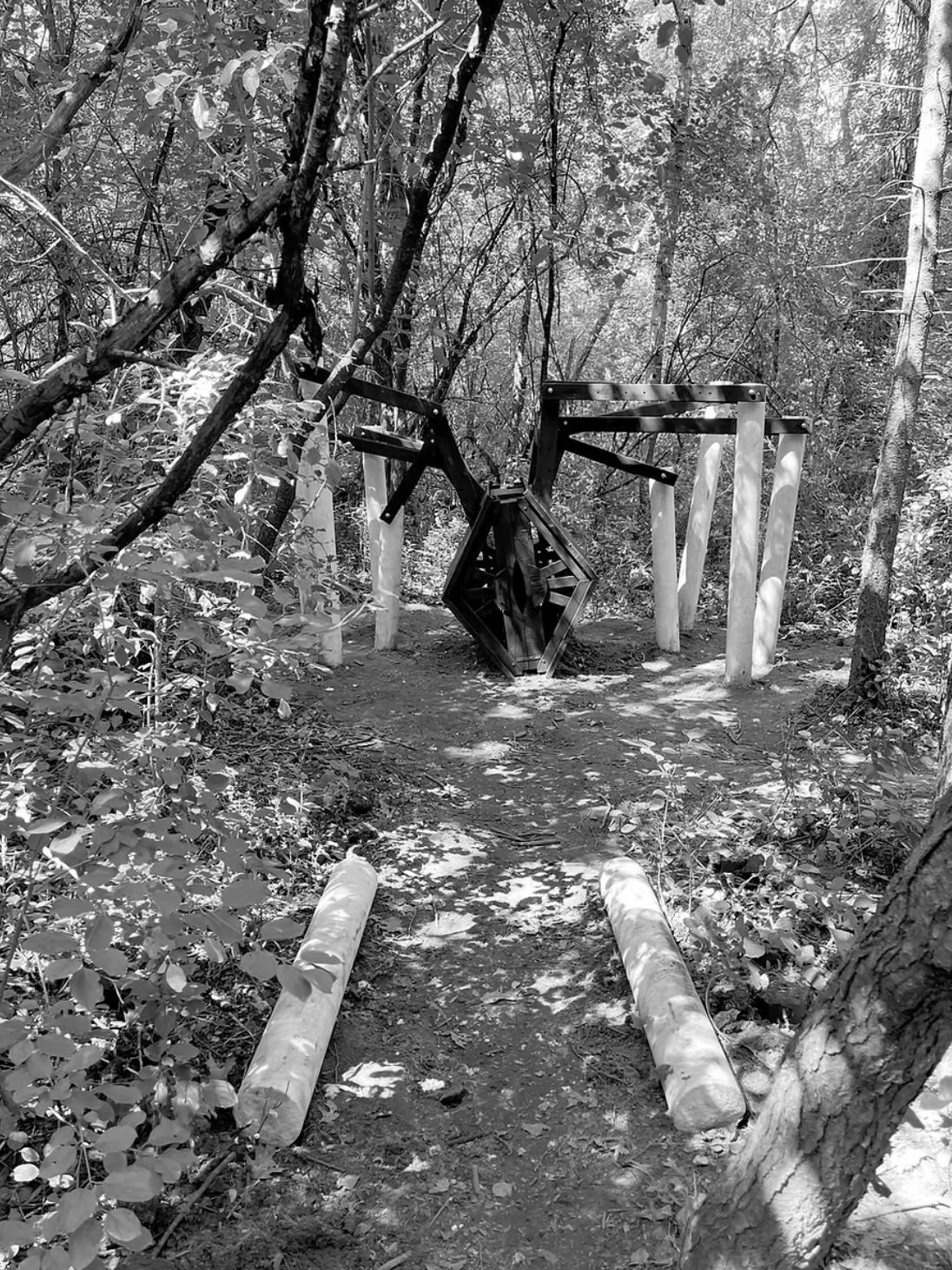
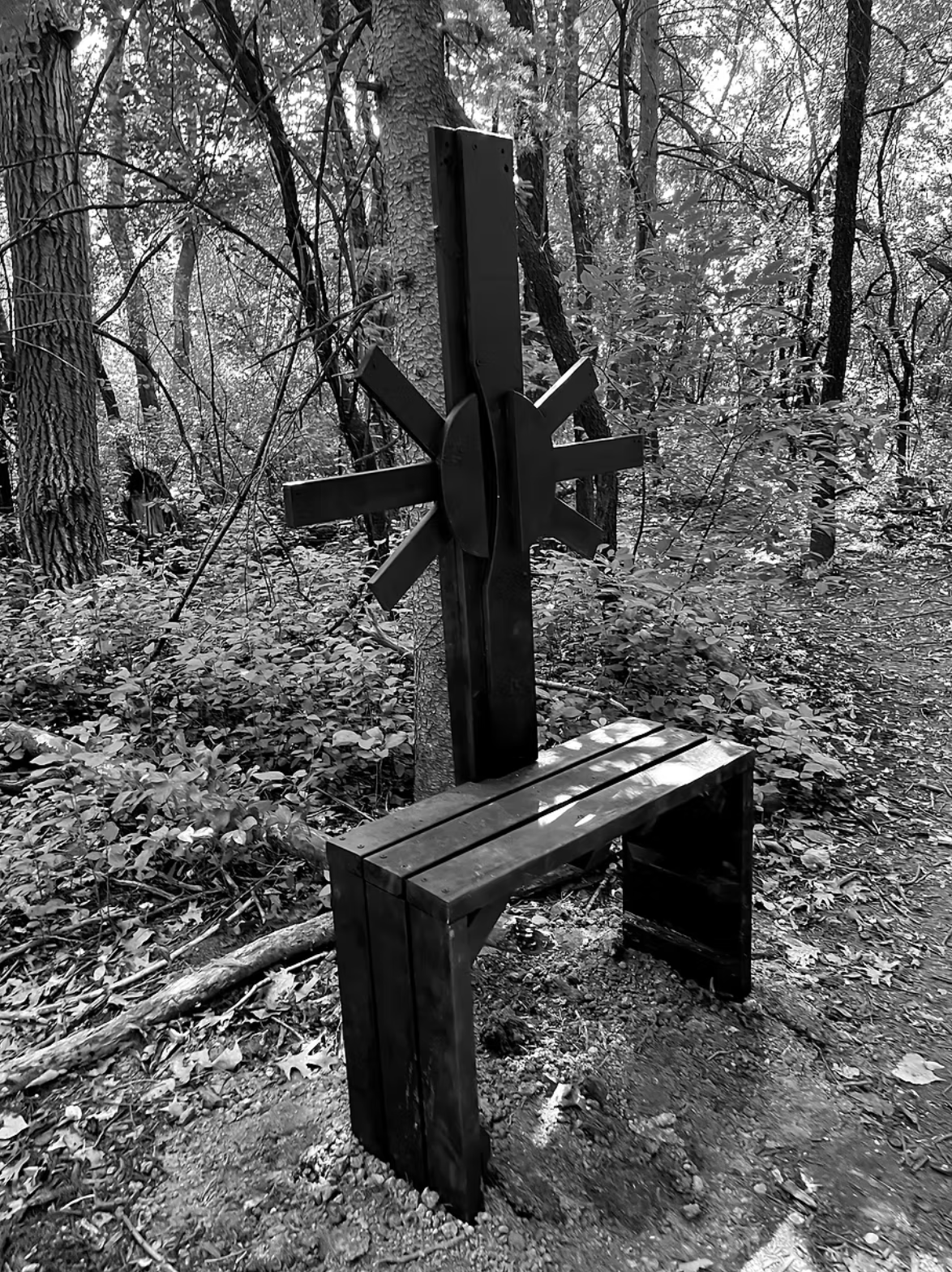
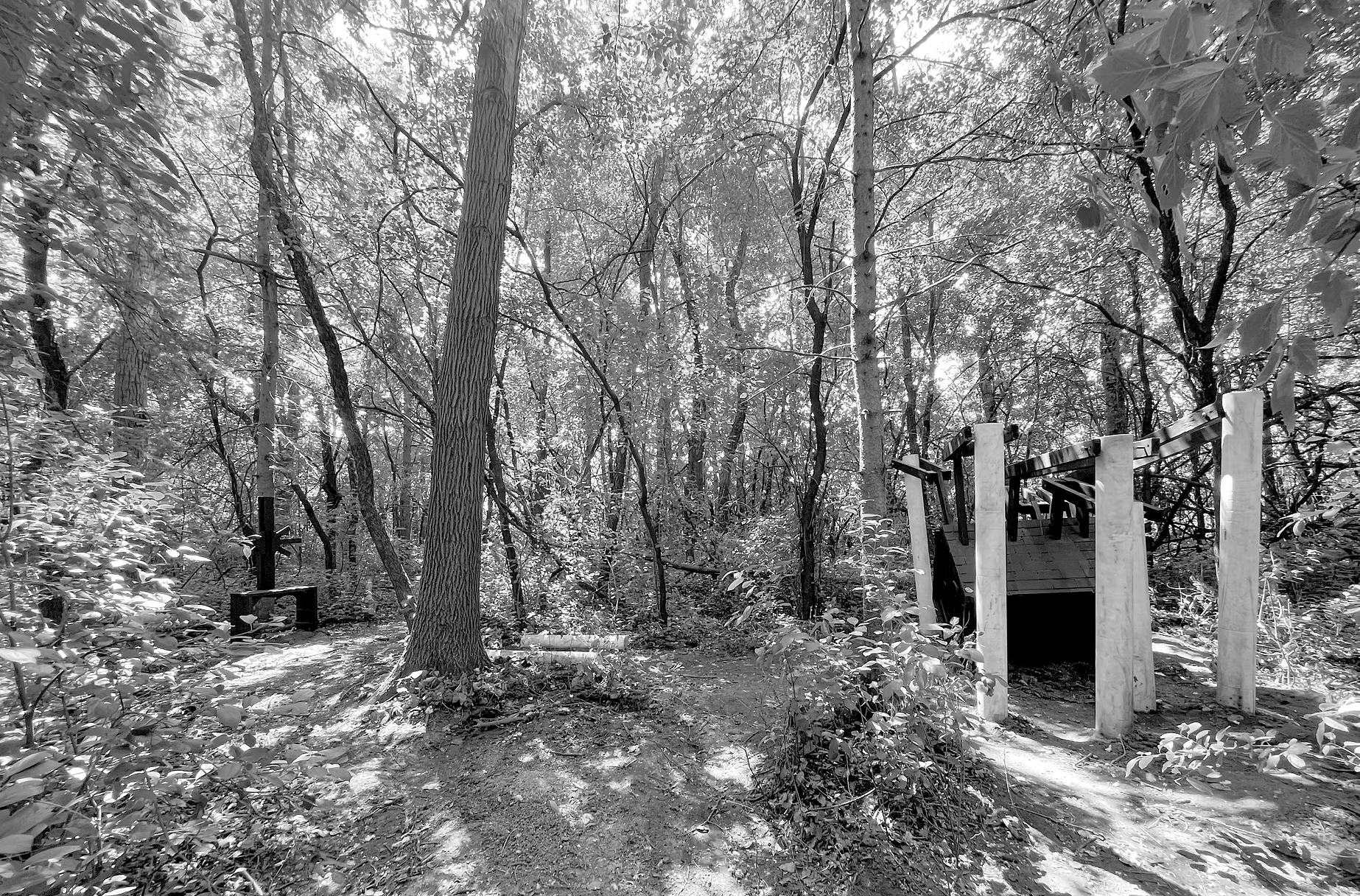
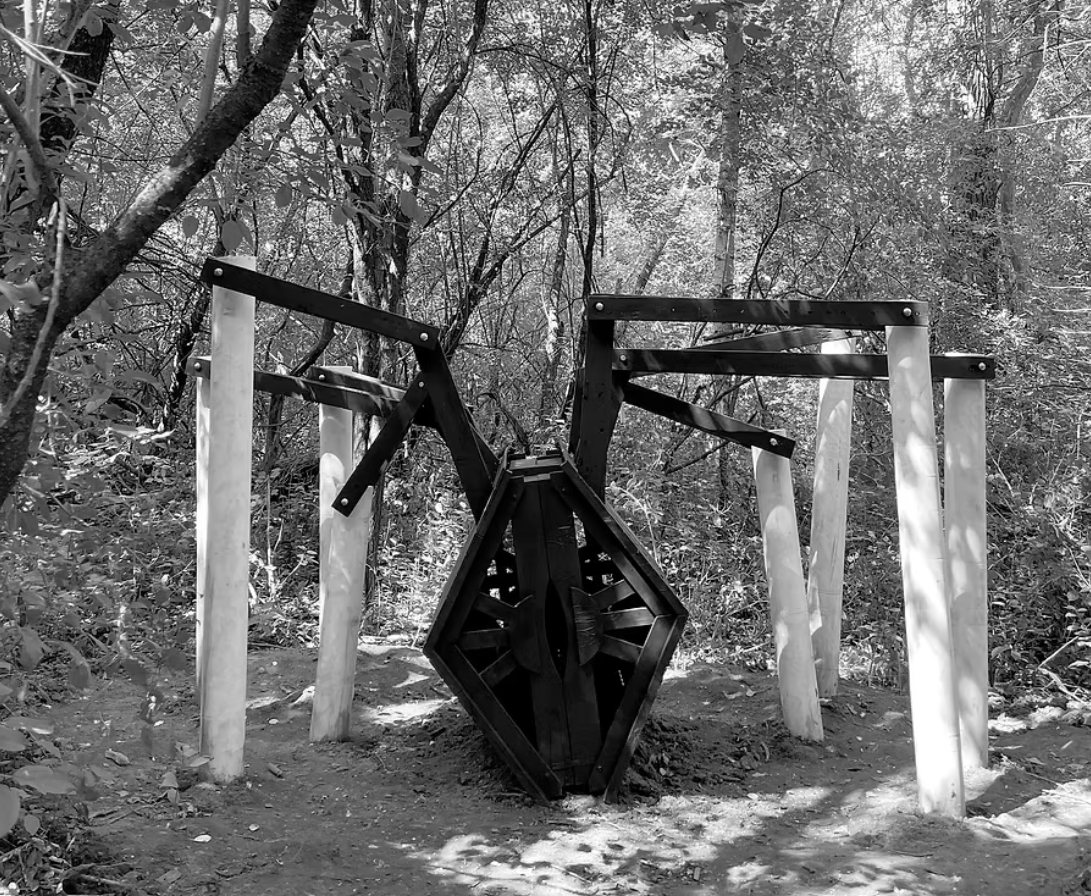
Kwaku’s /grās/ is a site-specific work honoring the spiders that inhabit Franconia’s woods. This intervention utilizes reclaimed marble, wood, and salvaged materials from my now decommissioned work, Topic 3: Consciousness (2018). Kwaku’s /grās/ consists of an interfaith spider temple, a sacred throne, and a path that incorporates the “desire path” created by visitors during the life of Topic 3.
Upon my return to Franconia Sculpture Park in 2025, I made three key observations that inspired this piece. My initial encounters were with the spiders living in the remains of my old sculptures. As I observed their web work interlaced with my threaded installations, I knew I had to house and exalt this collaboration. My second revelation was that in the 7 years since Topic 3: Consciousness, visitors carved a “desire path” deviating from the original walking paths I designed. This path became the main axis of alignment for Kwaku’s /grās/. My final observation was “I need a bench! A chair will do” written on my work. I responded to this vandalism by constructing a sacred throne as a witness & worship counterpoint to the temple. In the manner of the [REDACTED] for whom this work is named, sitting on the sacred throne is forbidden.
Marvin Touré
Marvin Touré is an Ivorian-American artist and educator whose interdisciplinary practice is guided by familial and cultural storytelling. Rooted in the mythologies of West Africa and the American South, his work employs material exploration to engage speculative histories and stories weathered by time.
“Where do our stories lie? Are they etched in stone, housed in wood and mud, or bequeathed by blood?”
From sculpture and architectonic diagrams to spatial interventions, Touré seeks pathways of spatial resonance to the historical through the fantastical.