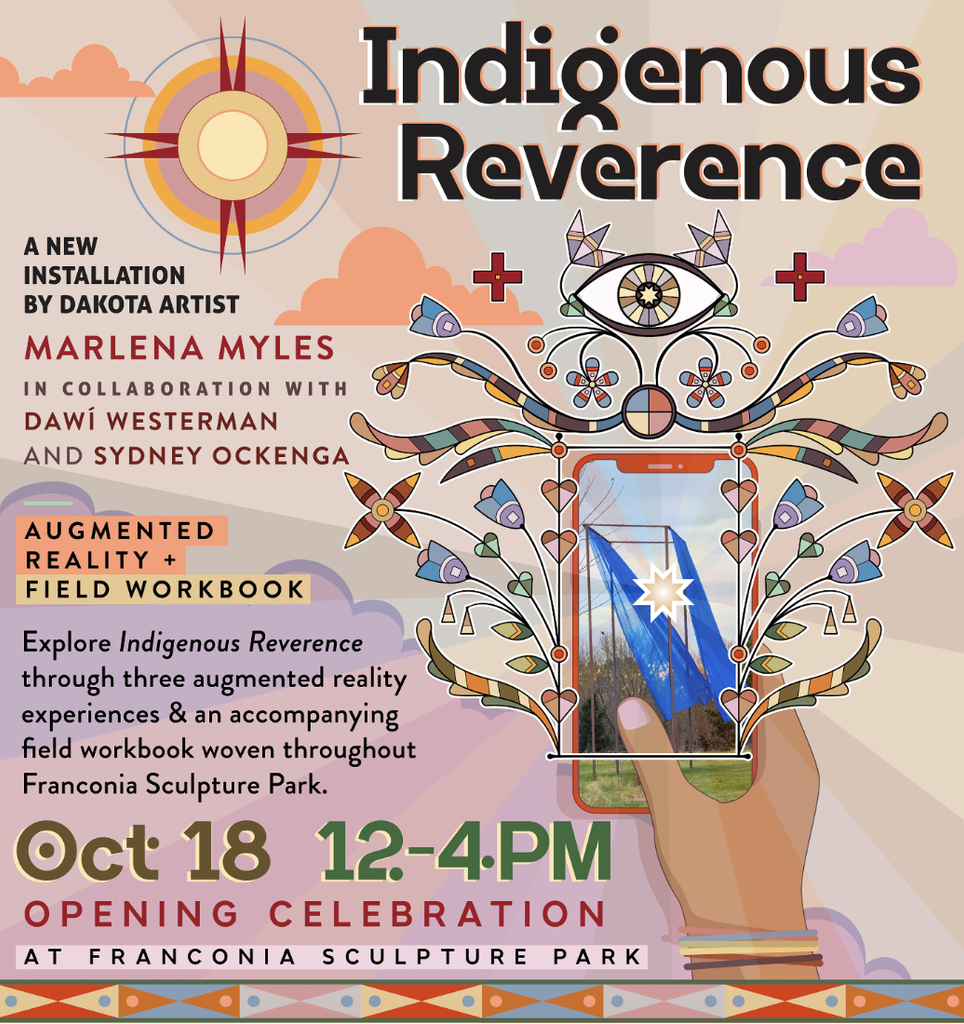
Indigenous Reverence: A New Augmented Reality Installation by Dakota Artist Marlena Myles
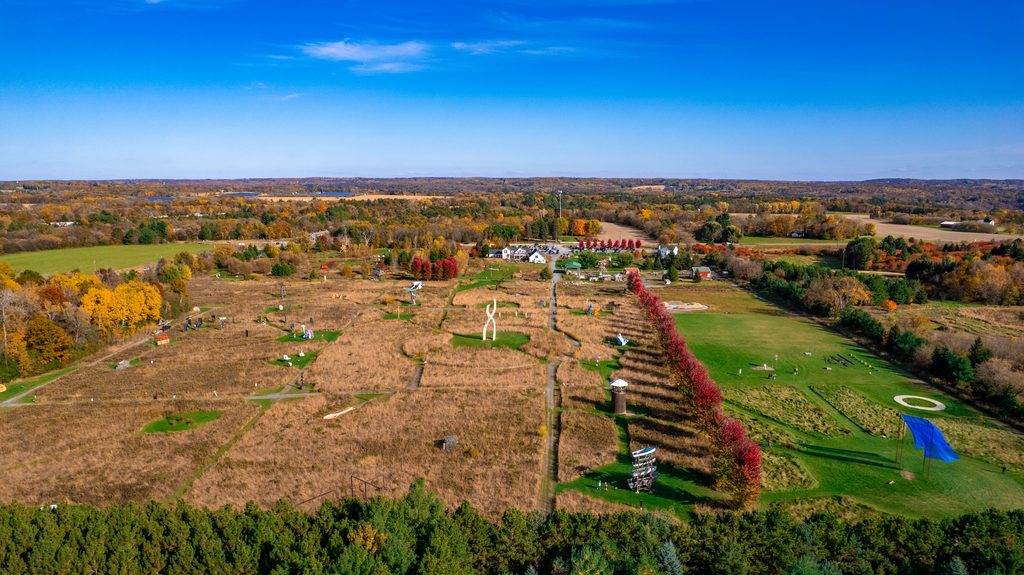
Created in collaboration with Dawí Westerman and Sydney Ockenga with support from The Joyce Foundation and Minnesota Humanities Center, Indigenous Reverence unfolds across Franconia Sculpture Park through three augmented reality experiences and an accompanying field workbook. Together, they invite visitors to slow down, become aware of the living world around them, and consider the relationships and responsibilities that emerge when we begin to see the land differently.
The project is structured around a progression of Dakota teachings: Wóinina, awareness through silence; Wóabdeza, understanding; and responsibility and action. Along the journey, teachings of Škaŋ, the sacred force of movement and change that animates the universe, and Wóniya, the breath of life and spirit that flows through living beings, invite visitors to reflect on the interconnected forces that sustain existence and our responsibilities within the living world.
Rather than using augmented reality to remove visitors from the physical world, Myles uses technology as a tool for returning attention to it.
“Augmented reality can reveal something that was already there but that we weren’t paying attention to,” says Myles. “I want the technology to eventually lead you away from the screen and back toward the plants, the land, and everything living around you.”
Rethinking What “Local Community” Means
At the heart of Indigenous Reverence is an expanded understanding of community: one that extends beyond human relationships to include the living world around us.
“Community is not only who lives nearby. It is also who we live among,” says Myles. “Native plants are part of that community. The land, water, animals and other living beings are part of it too. When we begin recognizing those relationships, community becomes much larger than a group of people within a geographic boundary.”
Within Dakota homelands, histories of colonization and displacement have disrupted relationships between Native people and many places. Indigenous Reverence looks toward how those relationships can be built forward, creating opportunities for people to reconnect with Dakota knowledge while developing greater awareness of the living communities that continue to inhabit the land.
Native plants throughout Franconia are therefore more than subject matter. They are relatives, teachers and members of a community visitors are invited to notice, learn from and care for.
Through the perspectives and creative contributions of Myles, Westerman and Ockenga, Indigenous Reverence brings Native voices into conversation with the living world, inviting visitors to understand community not simply as proximity between people, but as a network of relationships and responsibilities to place.
Three Experiences: Awareness, Understanding, and Responsibility
The three augmented reality experiences form a journey across Franconia Sculpture Park, with each encounter building upon the last.
The first introduces Wóinina, awareness cultivated through silence. Visitors are encouraged to slow down, listen, and notice what exists around them before attempting to interpret it.
The second moves into Wóabdeza, understanding. Through observation and relationship, what might have once appeared to be background becomes something with its own presence, knowledge, and story.
The final experience turns toward responsibility and action, asking what follows once we have learned to see and understand our relationships differently. Teachings of Škaŋ and Wóniya encourage reflection on movement, breath, and the forces connecting living existence.
Together, the experiences move visitors through a simple but consequential progression: awareness, understanding, responsibility.
A Field Workbook and Ways of Seeing
An accompanying field workbook and a series of Ways of Seeing signs carry these ideas beyond the augmented reality experiences and throughout Franconia Sculpture Park.
Activities, observations, artwork, and Dakota teachings, enriched by the perspectives and knowledge of collaborators Dawi Westerman and Sydney Ockenga, encourage visitors to engage directly with their surroundings. The Ways of Seeing signs create additional moments of encounter across the landscape, offering different perspectives for noticing plants, relationships and teachings that might otherwise be overlooked.
Native plants become another layer of the experience, helping participants recognize that knowledge does not flow only from one human being to another. The workbook and signage invite people to learn from Native voices while becoming attentive to the voices of the natural world.
Together, the augmented reality, workbook, and Ways of Seeing signs create multiple entry points into the same practice: slowing down, paying attention, and learning to see what is already present. Technology is not the destination, but an invitation to look again.
About Marlena Myles
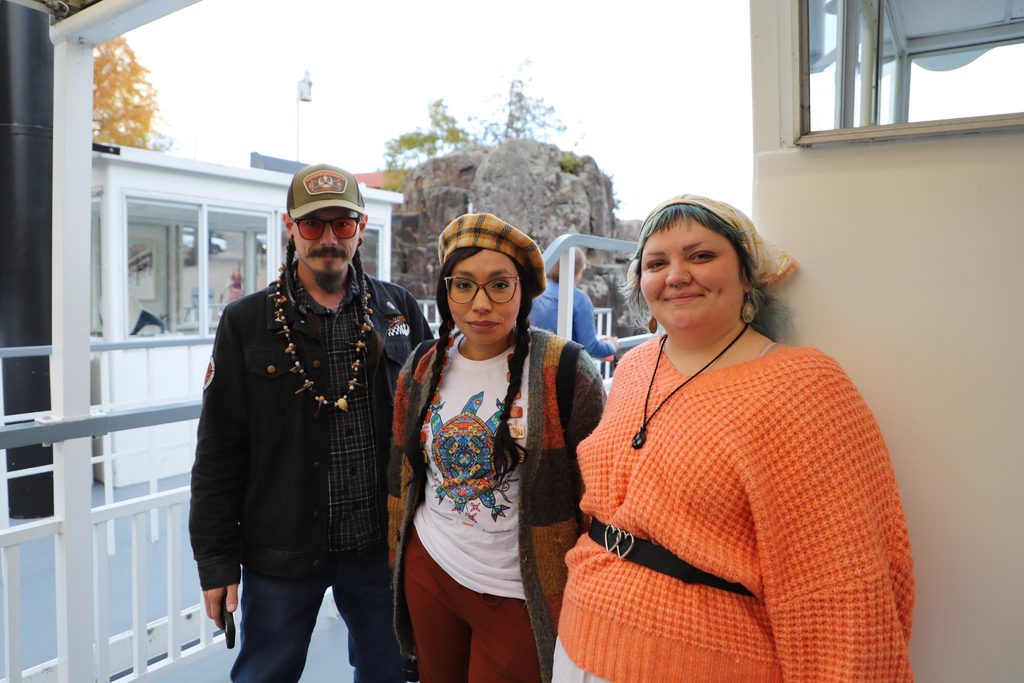
Marlena Myles is a self-taught Spirit Lake Dakota artist based in St. Paul, Minnesota. Her interdisciplinary practice brings Dakota history, language, cosmology, land relationships, and ways of knowing into contemporary contexts through augmented reality, public art, illustration, animation, murals, and design.
Her projects include the internationally recognized Dakota Spirit Walk in Saint Paul, Sacred Hoop Walk at the Minnesota Landscape Arboretum, Wodakota Walk at Caponi Art Park, and Ancestral Currents: From Bdóte to the Stars, her permanent outdoor installation at the Weisman Art Museum. Across her augmented reality work, Myles uses emerging technology to create new pathways into longstanding relationships between people, place, culture, and the living world.
About Dawi Westerman
Dawi Westerman is a Dakota language author, media producer, and artist living near his ancestral village of Kap’óža in St. Paul Minnesota. He is a father, grandfather, and traditional ecology enthusiast. He has authored multiple texts on the Dakota Language, created a cartoon miniseries, and collaborated with Marlena Myles to create public learning materials such as the Dakota Land Map series, with full audio accompaniment. He has taught Dakota language since 2013, and continues to create and author new materials. Dawi’s goal is to create fluent learning materials for speakers of all levels. His favorite subject to discuss at random is beans and their role as valued Dakota relatives.
About Sydney Ockenga
Sydney Ockenga is a Flandreau Santee descendant artist from Flandreau, SD. Now based in St. Paul, Minnesota, Sydney graduated from St. Catherine University 2021 with a B.A. in Studio Art and Art History. They create art as an act of liberation and an outlet for reflecting on their life experiences and to make connections to feelings that arise through storytelling. Sydney has always had a curiosity for exploring stories and the ways they appear in our lives and their impact on our relationships as relatives to each other and the natural world. Witnessing stories of family members and friends, and exploring the relationship between people and their stories, is where they most often find the inspiration to create art.